
September is Hose Safety Awareness Month, and as a proud NAHAD member and partner, Anderson Process is joining the industry’s effort to promote safer hose selection, fabrication, installation, inspection, and preventive maintenance practices.
Through the Hose Safety Institute (HSI), NAHAD provides education, training, and best practices that help manufacturers, distributors, and end-users improve safety and reliability. This year, NAHAD expanded Hose Safety Awareness Week into a month-long initiative, creating even more opportunities to share knowledge and reinforce safe hose practices.
In honor of Hose Safety Awareness Month, here are 5 safety tips with examples to help protect people, equipment, and facilities.
Hose Safety Tip #1: Don’t Assume the Media Tells the Whole Story
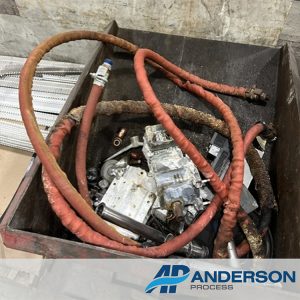
A customer was replacing steam hose assemblies almost weekly. The cover would bubble, the hose would deteriorate, and failures kept occurring.
The culprit wasn’t the steam.
After further investigation, we learned the facility used an ammonia-based water treatment process. Once heated into steam, the ammonia attacked the hose tube from the inside, eventually damaging the cover and causing premature failure.
The lesson? Understanding the full media makeup is just as important as knowing pressure and temperature.
Sometimes a “steam application” isn’t really just steam.
In this case, the right solution was a metal steam hose designed to handle the actual operating conditions.
Always disclose additives, chemicals, and process treatments when specifying hose.
A better understanding of the application can prevent downtime, safety risks, and repeated hose failures.
Hose Safety Tip #2: Make Identification Easy
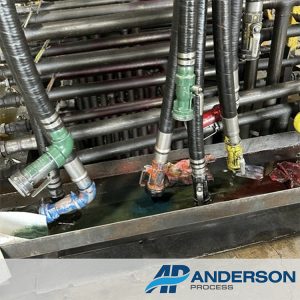
Many facilities color-code fittings to help prevent cross-contamination.
It’s a great start.
But when every hose is black, operators can still struggle with quick visual identification, especially in busy processing environments.
Using different hose colors can create instant line-of-sight recognition and help reduce the chance of connecting the wrong product, process line, or cleaning circuit.
A simple visual cue can improve efficiency and support safer operations.
If identification matters, don’t stop at the fittings. Consider color-coded hose as part of your hose management strategy.
Sometimes the easiest safety improvements are also the most visible.
Hose Safety Tip #3: Watch for Color Changes
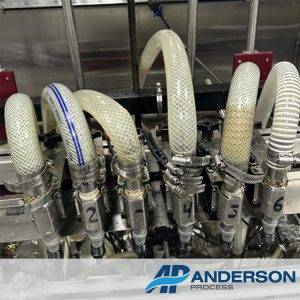
PVC hose is a reliable and economical solution for many fluid transfer applications.
But it doesn’t last forever.
One of the easiest warning signs is discoloration.
When PVC starts transitioning from clear or opaque to yellow, amber, or brown, it’s often a sign that the material is aging, breaking down, and becoming brittle.
The hose may still look functional, but its performance and flexibility may no longer be what they once were.
If your PVC hose is changing color, it’s time to inspect it closely and consider replacement before failure occurs.
Replacing a hose during planned maintenance is always better than replacing one after an unexpected shutdown.
Hose Safety Tip #4: Don’t Ignore Worn Covers
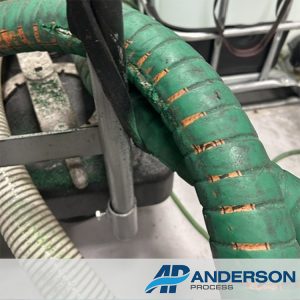
Cover abrasion is one of the most common causes of hose failure.
When the outer cover wears away and reinforcement becomes visible, the hose is already telling you there’s a problem.
That exposed reinforcement creates a vulnerable point that can compromise hose integrity and lead to premature failure.
The good news? Abrasion damage is often preventable.
Solutions range from full-length protective sleeves to localized guards designed for specific wear points.
If reinforcement is visible, replace the hose and address the source of the abrasion to prevent repeat failures.
A little protection today can save a lot of downtime tomorrow.
Hose Safety Tip #5: Bigger Isn’t Always Better. Smaller Isn’t Either.
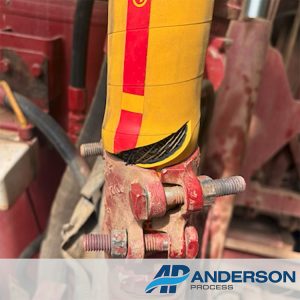
A customer experienced a hose failure shortly after installation and assumed the hose was the problem.
After reviewing the application, the hose itself was correctly selected.
The issue was the clamp.
The Boss-style four-bolt clamp used on the assembly was undersized for the hose’s outside diameter. As the clamp was tightened, it cut into the hose cover. Once pressure was applied, the damaged area became the failure point.
A properly sized clamp is just as important as selecting the proper hose.
Always verify hose outside diameter when choosing clamps and attachment hardware.
Every component in a hose assembly matters. A perfectly selected hose can still fail if the accessories are incorrect.